
Shoulder Weeks in London: Calmer Nights, Smarter Weeks
London doesn't have one travel season — it has a calendar of peaks and pauses. Most visitors pile into June, July and August, when schools break, flights fill and hotels lean into top-tier pricing. But between those high-intensity weeks sit longer, calmer stretches: early spring, late autumn, and a few precious weeks either side of major events. These are London's shoulder weeks — the shoulder season in London that can be your smartest move for a 5–7-night stay. 🌤️
Shoulder weeks aren't just about dodging the summer rush. They're about finding the city at its most liveable: shorter queues at the V&A, easier tables in Covent Garden, quieter hotel lobbies in Shoreditch. The weather stays comfortable, daylight stretches long, and you've got breathing room to spread your trip across two neighbourhoods without the stress of peak-week availability.
And here's the clever bit: being flexible with one midweek hotel switch opens up far more options. Instead of committing to a single property that might be sold out or expensive on one key night, you can stitch together two areas into one seamless week — at one total package price in £ — and build your stay around the calmest, best-value dates London offers.
TL;DR: Shoulder season in London is usually January–April (outside half-term) and September–November. For a calmer, better-value 5–7-night, stay, avoid bank holidays, half-terms and big events, and stay flexible with one easy midweek switch between two areas, so you can dodge price spikes and build a smarter week.
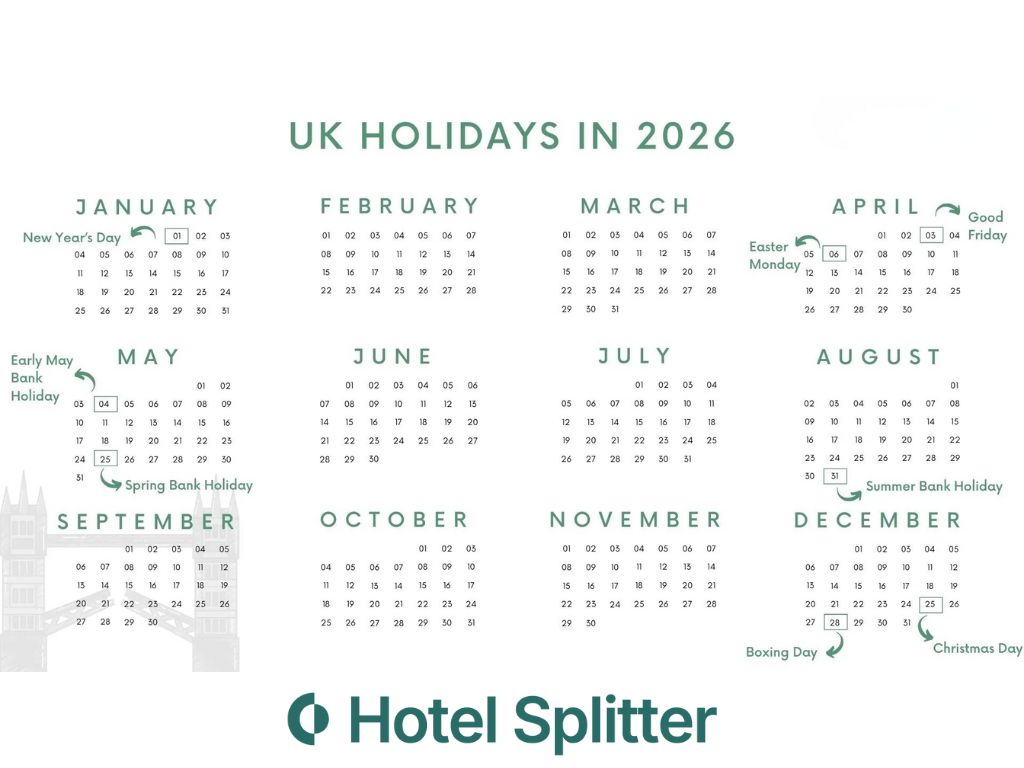
How London's travel year really breaks down
VisitLondon, the official tourist board, draws a clear line between London's busiest and quietest windows. London off-season windows run from January to April and again from September to November, with noticeably less footfall around key tourist areas and monuments. By contrast, London peak season months sit squarely between June and September, when tourist numbers surge and hotels and flights are considerably more expensive than at quieter times of year.
For a 5–7-night stay, that split matters. Peak weeks mean busier attractions, tighter availability across popular neighbourhoods, and higher average rates that can stretch across an entire week — even if you only need the city for a few specific days. Shoulder weeks, by contrast, give you choice: more hotels competing for your dates, more flexibility to move between areas, and streets that feel less like a theme park and more like a city.
It's not that summer is off-limits — plenty of travellers love the energy and long evenings. But if you're planning a week in London and want calmer conditions without sacrificing comfort or daylight, the shoulder windows either side of peak season tend to deliver a better all-round experience. And if you're open to one easy midweek switch, you can often sidestep the few expensive nights that sit inside an otherwise quiet week.
Why shoulder weeks work better for 5–7-night trips
London's hotel market doesn't move steadily — it spikes. A single two-week event can tighten availability and push rates across the entire city, even in neighbourhoods nowhere near the action. Wimbledon July hotel spike data from STR shows that during the 2025 Championships, occupancy hit above 90% on all but three nights, with average daily rates climbing to £234.58. That's not just a Wimbledon effect — it's a citywide constraint that locks in higher prices for anyone trying to book a full week around those dates.
The same pattern repeats for London 2025 headline events like the London Marathon (27 April 2025), Wimbledon (30 June–13 July 2025), and the BFI London Film Festival (8–19 October 2025). Each one concentrates demand into a narrow window, making it harder to lock in two consecutive nights at the same property — especially if you're targeting hotels in central or well-connected areas.
Here's where shoulder weeks — and one midweek switch — help. Instead of booking a single hotel for seven nights during a spike week, you can split your stay either side of the event. Arrive a few days early in Shoreditch, enjoy the calmer streets, then move to King's Cross for the second half of your week after the marathon crowds disperse. You've dodged the worst of the spike, stayed in two great areas, and kept your total package price competitive.
There's another angle, too. Whitbread midweek vs weekend reporting shows that midweek business demand and peak leisure demand remained robust, while weekend demand at short notice was slightly softer, particularly in London. That means Fridays and Saturdays aren't always the priciest nights — especially in business-heavy districts like the City or Canary Wharf. A 5–7-night stay that mixes midweek and softer weekend nights can work in your favour, and being willing to move once midweek opens up far more combinations than locking into a single property for the entire week.
How to spot shoulder weeks in your calendar
Finding a true shoulder week isn't guesswork — it's about knowing which dates to avoid. Start with the obvious: 2025 UK bank holidays list eight dates for England and Wales, including Early May (5 May), Spring (26 May) and Summer (25 August). Each bank holiday weekend tightens domestic travel demand, especially around that extra day off. Hotels and trains often feel busier, and rates can rise around those weekends, especially on popular routes and in central areas.
Next, check school half-terms. London 2025 half-term weeks run 17–21 February and 26–30 May for most London schools, bookending long stretches of term-time weeks. Half-term weeks bring families into the city, filling museums, West End matinees and family-friendly hotels. The weeks immediately before or after half-term, by contrast, tend to be much quieter.
Finally, cross out the headline event weeks — London Marathon (late April), Wimbledon (early July), BFI London Film Festival (mid-October). These are the spikes that distort availability across entire neighbourhoods, not just around the venues themselves.
Once you've marked out those dates, you're left with the real shoulder weeks: the quieter stretches of March, early May, late September and early November. Pick a 5–7-night window in one of those periods, stay flexible with your arrival day by a day or two, and you'll find far more availability and calmer conditions. If you're open to one midweek switch between two areas, you can even stitch together a full week when a single hotel might be sold out or expensive on one or two key nights.
What shoulder weeks feel like on the ground
May and September weather data from the Met Office shows daytime highs around 18–21 °C, with rainfall totals roughly 46–50mm and long sunshine hours. That's comfortable for all-day exploring — warm enough for a light jacket, dry enough to walk the South Bank without an umbrella every hour, and bright enough to make the most of long evenings in Greenwich or Hampstead Heath.
Beyond the weather, shoulder weeks change how the city feels. Museum queues are shorter. Restaurant bookings are easier to secure at sensible times. Hotel lobbies are calmer, with fewer tour groups checking in at once. You can walk through Covent Garden or Borough Market without feeling like you're navigating a festival crowd, and Tube carriages at midday actually have seats. It's the same city, just at a more liveable pace. ☕
And you're not alone in choosing this approach. Brits embracing shoulder season research from Globetrender found that 44% of UK travellers have booked a getaway in the shoulder season, prioritising tranquillity, value and flexibility over peak-summer travel. For a 5–7-night London trip, that shift makes sense: you get the full city experience without the peak-week intensity.
Make the most of shoulder weeks with one easy switch
Hotel Splitter pairs two nearby hotels into one seamless 5–7-night London stay with at most one easy midweek change. The algorithm matches hotels within a straightforward hop — typically a short Tube ride or a quick taxi — so you're never hauling bags across the city. You see one total package price in £, covering both stays, and you book the whole thing in one go.
For shoulder-week trips, that model unlocks real flexibility. Instead of committing to a single property that might be sold out or expensive on one key night, you can spread your stay across two different neighbourhoods while keeping the week mostly calm and well-priced. Stay in Marylebone for the first three nights, then move to Bermondsey for the second half. Or start in Shoreditch and finish near Paddington. You've covered two sides of the city, dodged any midweek spikes, and kept your trip inside a genuine shoulder window.
The beauty of this approach is that it doesn't rely on finding one perfect hotel with seven consecutive available nights. It relies on finding two good hotels with a handful of nights each — and during shoulder weeks, when availability is broader and competition is keener, that's far easier to do. You're not chasing discounts or hoping for a flash sale. You're simply building a trip that fits the calendar, fits your budget, and fits the way London actually works outside its busiest weeks. For more on when and why to switch, or which two-area combos work best, we've covered the detail elsewhere — but the principle is simple: shoulder weeks + one switch = smarter planning.
Shoulder-week planning FAQs
What exactly counts as 'shoulder season' in London?
Shoulder season typically covers January to April (outside half-term) and September to November. These are the weeks either side of peak summer and major holiday periods, when tourist numbers are lower and hotels are less intensely booked. Exact timing can shift slightly depending on school calendars and event dates, so it's worth checking bank holidays and half-terms before you lock in your dates.
Will I definitely pay less in shoulder weeks?
Not guaranteed, but shoulder weeks often offer better value and availability than peak-summer or event-heavy weeks. Cheapest months in London are usually January to March, with hotel and flight prices significantly lower than in summer or the holiday season. That said, prices depend on exact dates, demand and availability, so the best approach is to search live and compare a few shoulder-week windows rather than assuming one will always be cheaper than another. For more on why hotel prices change day to day, we've explained the mechanics in detail.
Is the weather good enough outside summer?
Yes, especially in May and September. Met Office climate data shows daytime highs around 18–21 °C, manageable rainfall, and long sunshine hours — comfortable for walking, sightseeing and outdoor dining without the peak-summer heat. Early spring (March, April) can be cooler and slightly wetter, but still perfectly workable with a decent jacket. Late autumn (October, November) tends to be mild but shorter on daylight, so plan accordingly if you want long evenings outdoors.
How far in advance should I book shoulder weeks?
As a rule of thumb, booking a few weeks to a couple of months ahead for hotels in shoulder periods often balances choice and flexibility. You'll usually find good availability and competitive rates without needing to plan a year in advance. That said, if you're targeting a specific weekend or a popular neighbourhood, booking earlier gives you more choice. Avoid leaving it until the very last minute — even shoulder weeks can tighten up around unexpected events or domestic travel surges.
How does one midweek switch actually work with Hotel Splitter?
You search for a 5–7-night stay in London, and Hotel Splitter shows you two hotels paired into one seamless trip with at most one midweek change. Both hotels are within a straightforward hop — typically a short Tube ride or quick taxi. You see one total package price in £, book the whole thing in one go, and move once midweek. Your bags go with you, and the switch is usually scheduled for late morning or midday, so you're not rushing at dawn or arriving after dark. For a step-by-step guide, see one hotel or two in London.
Ready to plan a calmer London week? 🗺️
Pick a shoulder-week window — March, May, September or early November. Cross out the bank holidays, half-terms and headline event dates. Be flexible with your arrival day by a day or two. Then search for a 5–7-night stay with one midweek switch between two areas. You'll dodge the peak-week spikes, stay in two great neighbourhoods, and keep one total package price in £ that reflects the calmer weeks you've chosen.
Shoulder weeks aren't a secret — they're just better planning. And with one easy midweek change, you can build a London trip that feels smarter, calmer and more yours from start to finish.
See 5–7-night shoulder-week stays in London
.jpg)
Last updated: 20 November 2025.